Skip to content

San Marco · Jacksonville, Florida 32207

Monday–Friday, 7:30 am – 5:30 pm

(904) 893-3248
Sub-Zero Service San Marco
Menu

Neighborhoods

Sub-Zero Repair in San Marco Square and Granada

The lions of the Square and the Mediterranean Revival blocks behind them — the historic heart of our service map, and the kitchens we know best.

Sub-Zero Service San Marco services San Marco Square, the Granada blocks, and St. Nicholas — ZIP 32207, the center of our map — with weekday visits 7:30 to 5:30. These 1920s Mediterranean Revival kitchens hold panel-ready built-ins in original millwork, where most repairs land between $250 and $1,100.

For Sub-Zero repair across San Marco and the river streets, ring the workshop at (904) 893-3248 or book online.

(904) 893-3248 · Monday–Friday, 7:30 am – 5:30 pm

The Heart of the Map

Kitchens Built When the Square Was New

San Marco Square went up in the late 1920s as the centerpiece of a planned Mediterranean Revival district, and the blocks that radiate from it — Granada chief among them — still answer to that decade. Their kitchens kept the period’s logic: a galley scaled for staff, a butler’s pantry between dining room and range, alcoves cut to 1920s proportions rather than to a modern 36-inch built-in. When a Sub-Zero® is dropped into millwork of that age, replacing the appliance is rarely the gentle option, and repairing it is the work we are built for.

Two ordinary tasks turn careful in these houses. Clearing a condenser through a kick grille buried behind face-frame cabinetry takes patience, and pulling a panel-ready unit forward without lifting the surrounding finish takes more. We index every panel’s hinges, protect the casework, and treat the original millwork as the expensive part of the room — because around the Square, it is.

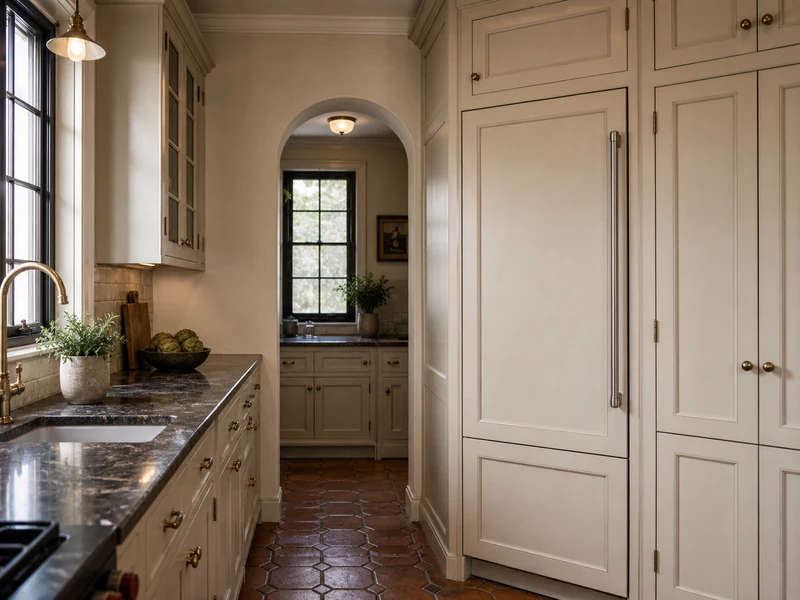
Panel-ready Sub-Zero column set into original 1920s cabinetry in a Granada kitchen near San Marco Square

The Alcove Problem

Why a Granada Coil Wants Cleaning Twice as Often

The tight built-in recesses that make these kitchens beautiful are hard on a Sub-Zero’s condenser. An alcove cut to 1920s proportions traps the heat the coil is trying to shed, and the oak canopy over the Granada blocks sheds pollen and fine debris that finds and mats that coil faster than any open kitchen sees. A condenser a modern kitchen might clean once a year wants attention twice as often here — and a choked coil is the single most common reason a unit around the Square runs long, never satisfies, and pushes the compressor toward the EC50 and EC40 excessive-run codes.

We carry that calendar into every visit in these blocks. Before anything electronic is condemned, the grille comes off and the coil is read — because the cheapest fault on the list is also the most likely one in a historic alcove, and naming an expensive part before clearing the coil would be exactly the kind of guess this practice refuses to make. The fixed diagnostic order is set out on our refrigerator repair page.

The Map, in Brief

What We Find Where

Where you live What the kitchens typically hold The call we take most
San Marco Square & the lions Renovated 1920s kitchens with panel-ready built-ins in original casework Condenser care and gasket renewal in tight alcoves
The Granada blocks 600-era and integrated units behind irreplaceable millwork Thermistors, evaporator fans, and panel-ready service
St. Nicholas off Hendricks & Atlantic Quieter blocks, mix of legacy over-unders and newer built-ins Ice makers scaled by hard water; storm-struck boards
Streets above the flood line Units spared brackish flooding but not lightning or surges Control-board failure after restoration spikes

The Square sits above the worst of the River Road flood line, so the recurring board work here traces to lightning and restoration surges rather than corrosion — the pattern our journal entry on storms and surges walks through in full.

The Water and the Weather

The Two Conditions Every Square-Area Kitchen Faces

Whatever the model or the vintage, two local conditions shape the work in these blocks. JEA supply runs 14 to 28 grains per gallon — very hard — and that scale is what clogs ice-maker inlet valves and solenoids on a schedule you can nearly set a clock by, the most predictable repair in 32207. A water filter changed on time and a descaling at service are the difference between an ice maker that lasts and one that fails every other summer.

The weather is the other. Northeast Florida’s 100-plus thunderstorm days a year, and the voltage spike that rides in when power is restored, reach every block in San Marco regardless of elevation — and a Sub-Zero board does not care whether the surge came to a riverfront estate or a kitchen off the Square. When a unit comes back dark or warm after an outage, the first-hour checklist keeps a marginal board from being finished off by a repeatedly cycled breaker. The workshop line is (904) 893-3248, or request a visit through our online booking page.

Arrange a Visit from the Workshop

Weekday appointments across San Marco, San Jose, and Epping Forest — gate clearance arranged before we arrive.

(904) 893-3248 · Monday–Friday, 7:30 am – 5:30 pm

Correspondence

Asked from Around the Square

How quickly can you reach a kitchen near San Marco Square?

Usually within the week, and often sooner — the Square and the Granada blocks sit at the center of our service map, so they are the easiest part of 32207 to schedule. We hold weekday windows from 7:30 to 5:30. Name the cross street when you book; the historic blocks have their own parking and access quirks, and knowing them ahead keeps the visit starting on time.

My 1920s kitchen has a Sub-Zero built into the original cabinetry — can you service it without damage?

Yes, and it is the heart of what we do in these blocks. The overlay panels and face-frame casework in a Mediterranean Revival kitchen often predate the appliance and cannot be reordered from anyone, so we remove and rehang panels with their hinges indexed, protect the surrounding millwork, and bring the unit forward on rollers rather than dragging it across heart-pine floors. In these houses the cabinetry is the irreplaceable element, and we treat it that way.

Why does my condenser need cleaning more often in a Granada kitchen than the manual says?

Because the alcove starves it. The tight built-in recesses in 1920s kitchens trap the heat the condenser is trying to shed, and the oak canopy over these streets sheds pollen and fine debris that mats the coil faster than an open kitchen ever sees. A coil a modern kitchen might clean once a year wants attention twice as often here — and a choked coil is the cheapest and most common cause of a unit running warm or logging an excessive-run code.

Do the blocks around the Square get the same storm-board failures as the riverfront?

Yes. The Square and Granada sit above the worst of the flood line, so brackish flood corrosion is less of a factor than it is on River Road — but the lightning and the restoration surges reach every block in San Marco. Northeast Florida sees more than a hundred thunderstorm days a year, and the spike when power returns, often 50 to 100 percent over nominal, is a documented killer of Sub-Zero control boards regardless of elevation. Whole-home surge protection is the single best safeguard.

St. Nicholas and the quieter blocks off Hendricks — are those on your map?

They are. Our coverage runs across San Marco proper, the Granada blocks, the Square itself, and the quieter St. Nicholas streets off Hendricks and Atlantic, all within 32207. We keep the radius deliberately small so weekday scheduling stays dependable; if you are unsure whether your block is in it, ring the workshop and we will tell you plainly.

Our kitchen runs an older 600-series Sub-Zero — is it worth keeping in a Square-area home?

Almost always. The 600-era units common in these renovated 1920s kitchens were built to be serviced, and their recurring faults — thermistors, evaporator fans, gaskets, boards — are replaceable, some boards now as rebuilt exchanges we source ahead. Against a five-figure replacement that disturbs original cabinetry, a measured repair on a sound 600 is the obvious choice, and these units routinely run well past their twentieth year when maintained.